
All Poets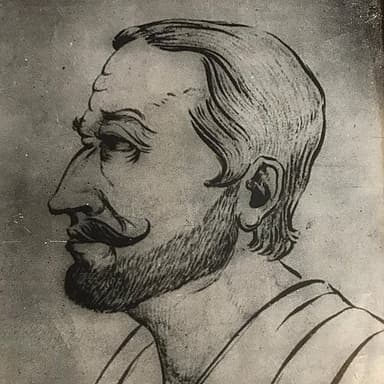
19th Century (d. 1870) — Romanticism & Ishq-e-Majazi
رسول میر
Rasul Mir
رِند پوش مال گِندنے درایی لو لو
"The carefree lass (garland of flowers) has come out to play, lo lo."
The Legend
The nineteenth century in Kashmir was an era marked by shifting empires—from Afghan to Sikh, and eventually to Dogra rule—yet beneath the political turbulence flowed a quiet, revolutionary current in the region’s literary landscape. For centuries, the Kashmiri poetic tradition had been overwhelmingly dominated by the towering ascetic and mystic voices of the past, deeply rooted in spiritual instruction, divine longing, and the contemplative philosophy of the Rishi order. It was within this environment that Rasul Mir emerged, gently shifting the gaze of Kashmiri verse from the heavens to the earth. Widely remembered today as the "Keats of Kashmir," Mir breathed a new, purely romantic vitality into the language, elevating human love, physical beauty, and emotional longing to the level of high art.
Born in the historic town of Dooru in the Shahabad pargana—a region celebrated for its lush topography, murmuring springs, and scholarly heritage—Rasul Mir’s early life remains sparsely documented, leaving historians to reconstruct his world largely through his oeuvre. Shahabad was not merely a backdrop for his life; it was the active canvas of his imagination. The sensory richness of his environment—the blooming of the pamposh (lotus), the melancholic grace of the willow, the rhythmic flow of local streams—became the foundational vocabulary of his verse. Unlike his predecessors, who often utilized nature strictly as a metaphor for the divine or the transient, Mir delighted in the physical world for its own sake, celebrating aesthetic beauty with an unprecedented, unapologetic intimacy.
His most profound contribution to Kashmiri literature was the pioneering of the Kashmiri ghazal as a vehicle for pure romance. Prior to Mir, the expression of Lol (لوٗل)—a uniquely Kashmiri concept denoting a complex, tender blend of love, longing, and sorrow—was almost inextricably interwoven with Ishq-e-Haqiqi (divine love). Rasul Mir boldly decoupled them. He championed Ishq-e-Majazi (عشقِ مجازی), or earthly, romantic love, infusing it with such dignity and emotional refinement that it required no theological justification. He transformed the Kashmiri language from a medium of moral and spiritual instruction into a delicate, highly tuned instrument of romance, capable of capturing the most subtle tremors of the human heart.
Mir’s genius lay in his linguistic alchemy. He seamlessly blended the classical elegance of Persian literary tropes with the raw, rhythmic cadence of the Kashmiri vernacular. His poetry possesses an inherent, flowing musicality, crafted not just to be read, but to be sung. This musicality is vividly captured in iconic verses like, Rind poosh maal gindanay drayi lo lo (رِنٛد پوش مال گِنٛدنے درایی لو لو)—"The carefree garland of flowers has come out to play." Through such imagery, he brought a newfound tenderness and lyrical fluidity to the language. He immortalized expressions like Balmarae (بالماراے)—a deeply affectionate invocation meaning "O my youthful love"—turning it into a timeless motif of Kashmiri romantic longing that continues to echo in the Valley's traditional music.
The legacy of Rasul Mir is inextricably woven into the cultural and emotional memory of Kashmir. He did not merely write poetry; he engineered the artistic vocabulary through which generations of Kashmiris would articulate their experiences of love, beauty, and separation. Today, his ghazals remain the lifeblood of traditional Chakri and Sufiyana musicians, seamlessly bridging the gap between elite literary archives and the oral traditions of the common people. Rasul Mir stands as a testament to the enduring power of aesthetic grace. As long as songs of love and longing resonate across the Valley, his verses will remain the definitive language of the Kashmiri heart—a lasting monument to a poet who saw the profound not in the renunciation of the world, but in the exquisite, fleeting beauty of human connection.
Philosophy
Rasul Mir redefined Kashmiri verse by elevating earthly love—Ishq-e-Majazi (عشقِ مجازی)—to a sacred aesthetic, liberating human desire from the heavy veil of mystic allegory. He established that the tender ache of romantic longing, or Lol (لوٗل), is a profound, self-justifying truth that requires no divine pretext. His lyrical legacy endures as a timeless reminder that the deepest resonance of the soul is found not in ascetic withdrawal, but in the exquisite, lived reality of human connection.